

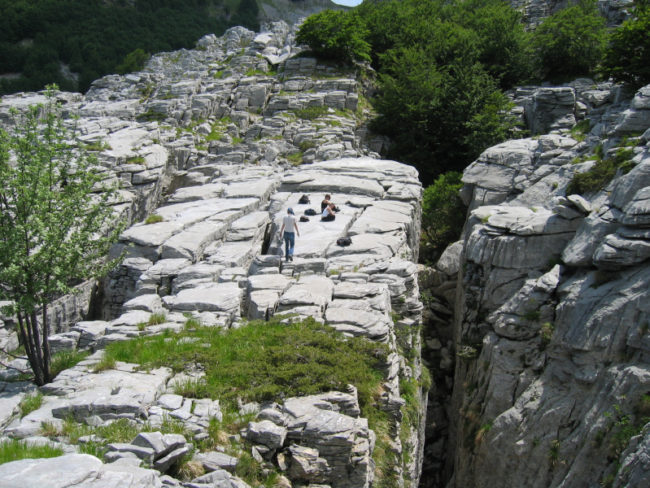
A moonscape-like landscape: the Vetricia plateau
UN PAESAGGIIO QUASI LUNARE: L’ALTOPIANO DELLA VETRICIA .
A MOONSCAPE-LIKE LANDSCAPE: THE VETRICIA PLATEAU


UN PAESAGGIIO QUASI LUNARE: L’ALTOPIANO DELLA VETRICIA .
A MOONSCAPE-LIKE LANDSCAPE: THE VETRICIA PLATEAU
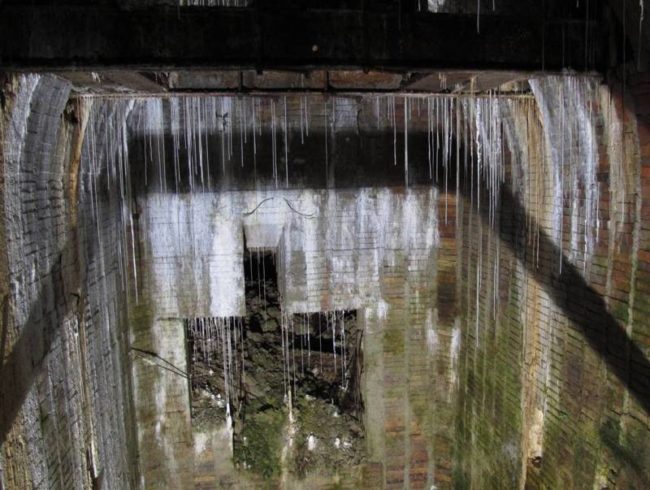
It is known how slow the growth of formations is in caves. However it often happens, inside concrete tunnels, or in the dungeons of castles or even under the reinforced concrete beams that are exposed to weather conditions, to see formations of considerable size, despite the fact that the places from where they have originated…
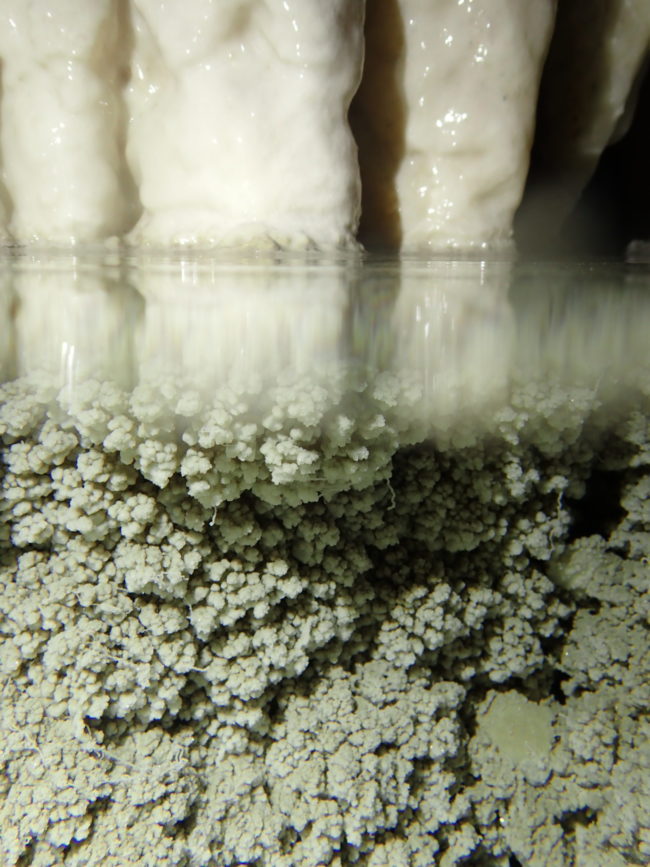
I cristalli, che in queste foto appaiono grigiastri, fino a 52 anni fa erano bianchissimi. Il cambiamento del colore è stato provocato da una violenta piena verificatasi nell’agosto del 1965 che immise nel laghetto le acque limacciose dell’Acheronte…
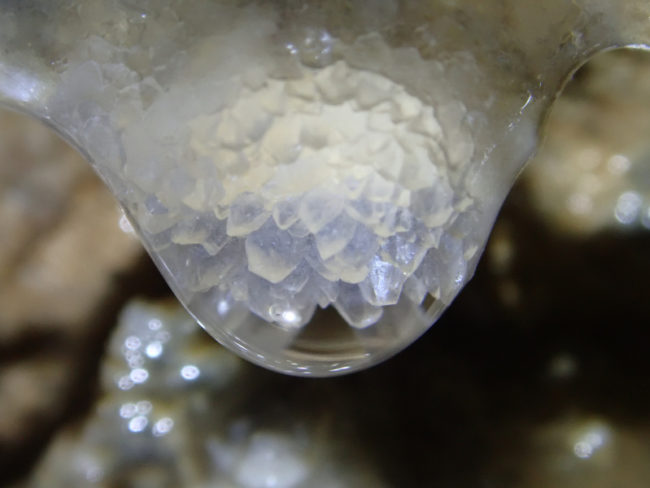
Abbiamo parlato delle cannule, descrivendone le caratteristiche e i meccanismi che ne determinano la crescita, ma l’amico speleologo Andrea Massagli, guida alla Grotta del Vento ed appassionato di macrofotografia, ha eseguito nella zona centrale del “primo itinerario” alcuni scatti che sembrerebbero mettere in discussione almeno parte di quanto affermato nell’articolo precedente…
We have spoken of straws, describing their characteristics and the mechanisms which determine their growth, but our friend the speleologist Andrea Massagli, a guide at the Grotta del Vento and an enthusiast of macro photography, took some shots in the central area of the “first itinerary” which seem to put in discussion at least partly what was affirmed in the previous article…
Many tunnels in the Grotta del Vento have been dug under pressure by water that completely filled them, exerting its erosive action in all directions. In that way circular passages have been formed, elliptical in shape or however round with evident signs left on the walls by the vortexes caused in the flow of water…
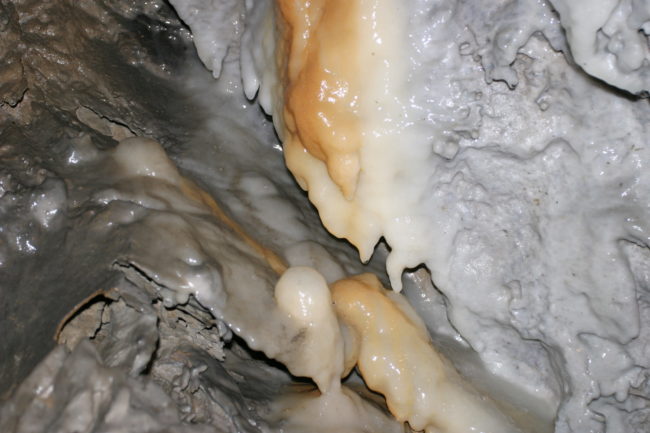
Colori vivaci nelle concrezioni della Grotta del Vento.
The bright colours of the formations in the Grotta del Vento.
Normalmente il concetto di “sasso” è legato al suo peso:
“Pesante come un sasso”, “Cadere come un sasso”, “I sassi nell’acqua vanno subito a fondo”….Infatti non accade quasi mai che in natura i sassi possano salire, soprattutto su lunghi tratti aventi forti dislivelli.
Eppure nella Grotta del Vento ciò è accaduto, le prove sono inconfutabili e documentate fotograficamente…
Normally the concept of “stone” is associated with its weight, …“heavy as a rock”, “drop like a stone”, “stones in water go straight to the bottom”…. And in fact it almost never happens in nature that stones can rise up, especially over long tracts with big differences in height.
And yet in the Grotta del Vento it has happened, the proof is undeniable and documented with photographs. #grottadelvento garfagnana #curiosità #funfacts
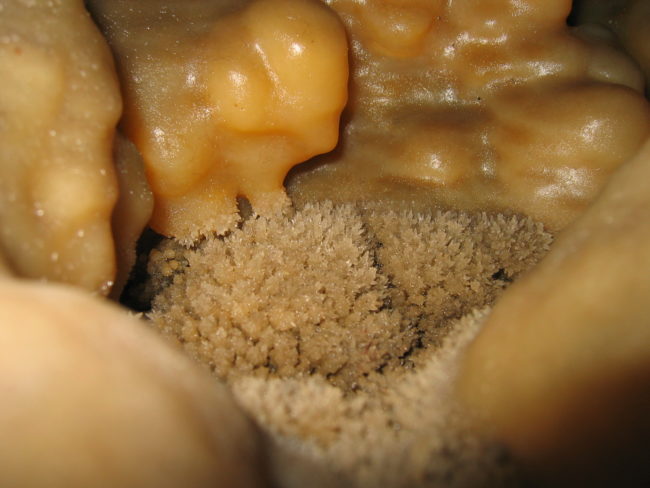
In all the areas with many formations in the Grotta del Vento minute pools of motionless water can be seen which reflect like mirrors the surroundings below. Looking closely at them one can observe that while the formations which surround them have a smooth shiny surface, the bottom and the sides of these pools…

On 22/08/17 we published an article about boxworks, which are the result of the corrosive action that the carbonic acid exerts on the dolomitic limestone of the first itinerary, isolating a network of fine layers of calcite. This time let’s talk about other phenomena of corrosion, made on the same type of rock a few…
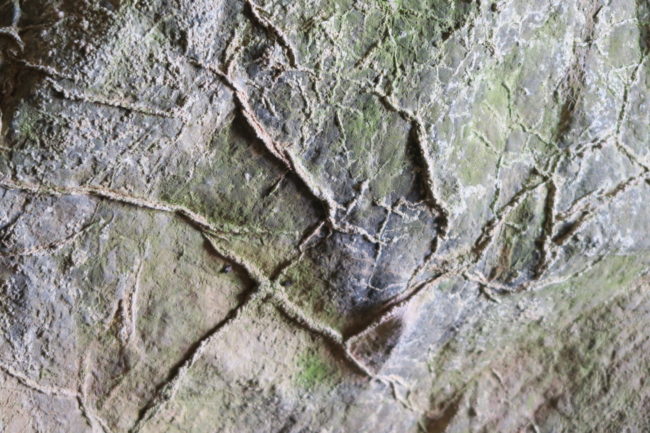
On first sight they look like boxworks but they are not. While boxworks are very thin layers of calcite sticking out that have resisted to the corrosion of the dolomitic limestone which surrounded it, these protruding veins, clearly visible in the part of the tunnel which separates the natural entrance of the cave from the…